Category Archives: Original

It’s just a story, it’s a matter of taste

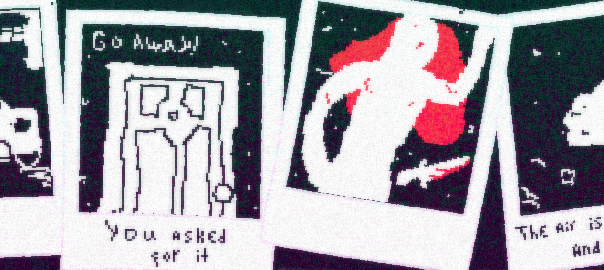
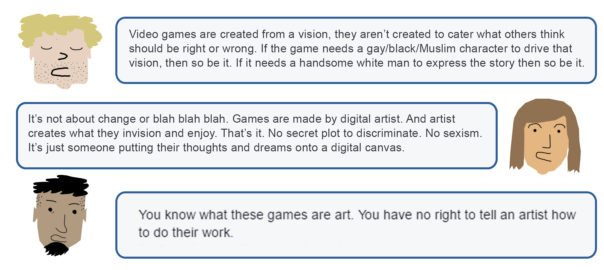
In my travels as an internaut I too often come across expressions like “it’s just a story”, “it’s a matter of taste” or “it’s what the artist found within” when a fearless user points out a game’s ideologically objectionable content. It is a good point: no one can tell someone who’s expressing themselves how they should do it. But I don’t think we’re talking about freedom of speech, but rather of one’s accountability over the content they broadcast. The very notion that someone would think a story or a game is something we come up with out of the blue, as a matter of taste, and has no effect on the player beyond a series of emotions, unsettles me quite a bit. Continue reading It’s just a story, it’s a matter of taste →

Asdfasd

Genre is a slippery concept. Audiences tend to think of genres as separate shelves where every book, every movie, every song has a definitive place. In videogames, this is reinforced every time a company capitalizes on our shelving compulsion to sell us stuff, or every time an indie hit spawns a thousand derivative games, giving birth to a genre that is more an awkward formula for success than an organic system of expressive devices.

I’m about to tell you how refreshing it feels when I come across what feels like a True Genre, however absurd or insignificant it might be, but don’t let anybody define “genre” for you. Games are experiences. You’re not supposed to buy into marketing-born, feature-based experience classifications. I mean, you are, in fact, but what I’m trying to say is: don’t. Continue reading Asdfasd →

Vernacular

Photographs can’t lie, can they? I mean of course they could, but they look like they wouldn’t. We do associate them with proof, after all. Why is that? I bet it’s the mechanical aspect of it. We see a machine, eating light through a lens then excreting an image. Where could a lie hide there? Light wouldn’t lie and neither would a machine, much less excrement of any kind. Only people lie, and they weren’t a part of the process.

Except they were, of course. People built the machine. They chose what light to feed it. They… did things to the excrement. Continue reading Vernacular →

DOBOTONE: One Console to Rule Them All

DOBOTONE is a [itg-glossary glossary-id=”553″]party game[/itg-glossary] made by the Argentinians behind VIDEOGAMO. It consists of a console plugged into a projector and four controllers with two buttons each. The console allows you to switch between mini games and allows you to control in-game variables like gravity, zoom, and video distortions. The console’s design and its controllers seem inspired by old consoles like the [itg-glossary glossary-id=”554″]Magnavox Odyssey[/itg-glossary], which also had integrated mini games. The retro aesthetics and the diversity induced by the person in charge of controlling the console keep the game interesting.
Continue reading DOBOTONE: One Console to Rule Them All →

Games as Art: Introduction to the Death of a Debate

The question of whether videogame development is an art discipline was prevalent a few years back, but now it’s pretty diluted. Most folks involved got tired of it. The same old arguments learned to repeat themselves all on their own. Many realized that proving one thing or the other wasn’t going to change anyone’s life.

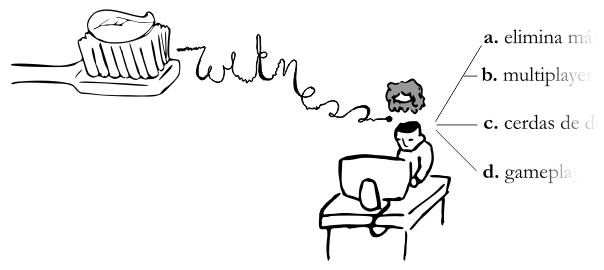
However, the concern is understandable, especially for newcomers. After the hundredth game sold to us like a toothbrush, the slightest contact with the medium’s nuances and its deepest virtues pushes us toward art as the only field able to give meaning to our experiences. And with good reason, too. Continue reading Games as Art: Introduction to the Death of a Debate →

PSA: On Being a Woman and Making Videogames

There are far fewer women than there are men doing videogame development in Argentina: we don’t have the exact numbers as of yet, but there should be a [itg-glossary glossary-id=”516″]FundAV[/itg-glossary] survey soon that will provide us with concrete data on the matter. What we do know is that they exist, they’re professionals just as capable as their counterparts of the opposite sex, and they work in every role and capacity necessary for the development of a videogame. That’s to say, there are women who program, who do QA, who make art, design UIs, animate, do game design, make music, and produce. Continue reading PSA: On Being a Woman and Making Videogames →

We Call It the Videogame Industry

A few weeks ago, alongside my fellow Matajueguian, Pablo F. Quarta, and several other people, I participated in a panel held during the first edition of Meet the Devs 2016 about the current state of the videogames industry here in Argentina. I was struck by the thought that someone would think me capable of talking about the industry, since I’ve (almost deliberately) never been a part of it.

MeetTheDevs2016

In the past, I studied film. In the manifestos by different filmmakers and in the other theoretical texts I read, the difference between industrial and independent cinema was always latent or explicit. We see this same confrontation in animated film, comics, music, and other art. There’s always this idea in the background that independence means independence from the industry, and that it promotes a more authorial product, not one designed for popular taste but rather one that takes risks, either formally or in its content. Continue reading We Call It the Videogame Industry →

Love in the Time of BBS

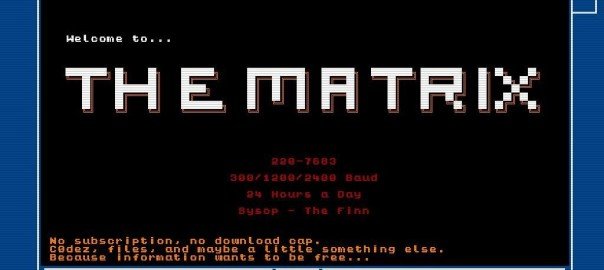
Before the rise of social networks people used forums to hang out on the internet, and before the internet as we know it even existed,people used Bulletin Board Systems (or BBSes) to communicate. I was never part of a BBS, but I have read Underground, a book by Suelette Dreyfus and Julian Assange about the birth of hacker culture. The first hackers used BBSes to talk to each other on the web, and hacking and technical differences aside, they hung out on the web in the same way my friends and I did on forums.

Forums and BBSes were systems generally provided by an individual so that people could talk to friends and strangers on the internet. You would post a public message, other community members would answer, and discussions would arise. Your value as a member depended on what you posted: as long as you had your own style and the stuff you shared was interesting, people would converse with you.

Unlike social networks, those communities made it easy to be anonymous, because you only needed a nickname and an email address in order to post. Those communities were also more tightly knit and more tribal. If something about one your virtual communities bothered you, you could file a complaint, go somewhere else, or roll a forum of your own.

Life was rough on my teenage years: there were troubles at home, I was in the closet, my classmates and I never clicked. But when I was on the internet I felt that I could be myself without having to suffer for it. Thanks to internet forums I met people who are still with me to this day, and I learned how to code.

My teenage safe havens, however, are now long gone. I used to worry about new generations not knowing about BBSes, or forums, or about how people interacted on the internet before social networks were a thing. Thanks to Digital: A Love Story (Christine Love, 2010) and Guilded Youth (Jim Munroe, 2012), my worries have been put to rest. Continue reading Love in the Time of BBS →
Don’t Look Back

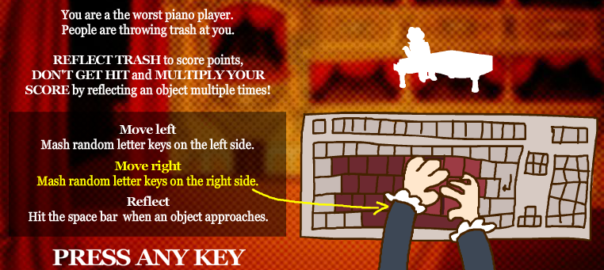
The world of videogames moves at a very quick pace and we have a tendency to forget about some of the most interesting titles we’ve had the pleasure of coming across. A recent conversation reminded me of a truly notable title: Don’t Look Back. As some of you will already know, it’s the title of the game Don’t Look Back by Terry Cavanagh, published in 2009.

What could be so interesting about the title of this game? After all, it’s only three common words and their meaning is clear — it’d be more worthwhile to reflect on the game’s virtues. But no, today I’m more interested in its name, and more particularly in the semantic mutations it’s subject to throughout the game. Continue reading Don’t Look Back →

Corporate Climber

Today I’m going to tell you about a piece of interactive humor called Corporate Climber (Pixeljam, 2011), and Corporate Climber, in turn, is going to tell us that the real interactive joke is authority.

The game’s structure is that of the gradual rise to power, the most widely used structure in games both old and new: a male and somewhat pale individual starts off in the world with nothing to his name and accumulates power-ups until he’s become a superior… something. Continue reading Corporate Climber →